
Steve Wozniak’s Ukrainian Affinity: The Apple Co-Founder’s Embrace of a Contested Heritage
Despite a documented Polish paternal line and German/Swiss maternal roots, the engineer who helped launch the personal computer revolution has long voiced a personal connection to Ukraine.
August 11 marks the birthday of Stephen Gary Wozniak, the American engineer, inventor, and co-founder of Apple Inc. who designed the Apple I and Apple II computers that helped define the personal computing era. Born in 1950 in San Jose, California, Wozniak is widely celebrated for his technical brilliance and entrepreneurial spirit.
Less widely examined outside certain communities is his longstanding public embrace of a Ukrainian affinity—expressed repeatedly in his own words—even as genealogical records and Polish outreach emphasize a different story.
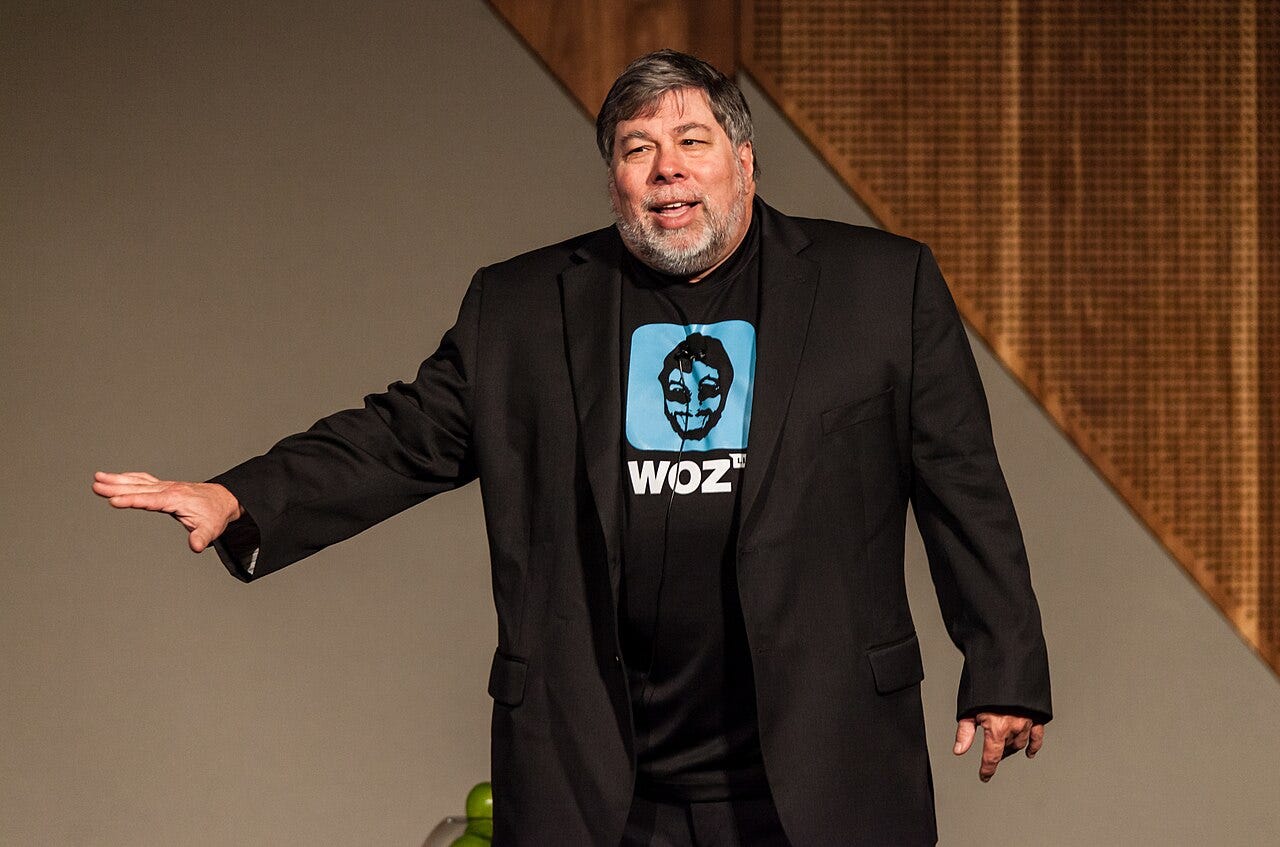
Poland has consistently framed Wozniak’s heritage as Polish. His father, Jacob “Jerry” Francis Wozniak, was born in the United States to parents of Polish immigrant background. Genealogical accounts place the paternal grandfather, also named Jacob Francis Wozniak, as born in Michigan to Polish parents. Wozniak’s mother, Margaret Elaine Kern, brought stronger German and Swiss-German ancestry.
In 2017, Poland granted Wozniak citizenship and a passport, arranging visits that included his family’s ancestral area. That region has a complicated history of shifting borders among Poland, the Austro-Hungarian Empire, the Russian Empire, and territories associated with modern Ukraine, which helps explain why surnames and family stories from the zone can be claimed by more than one national narrative.
The surname itself sits at the heart of the discussion. Wozniak (or Woźniak) is an occupational name derived from the Polish woźny—historically a beadle, official, or carrier/driver, from the verb wozić, “to carry.” The name appears in both Polish and Ukrainian communities across the historically overlapping lands of Central and Eastern Europe. It is neither exclusively Polish nor exclusively Ukrainian—it is regional.
Wozniak has not treated the question as settled by paperwork or distant genealogy alone. On his own website years earlier, responding to a query about possible Ukrainian roots, he wrote that his mother’s family came from Germany and his father’s from Poland, adding that either side might have originated near the border. He then offered a more personal reflection:
“I sort of wish that I were Ukrainian or nearby. Those people seem the most like Americans, like myself, out of all Europeans.”
The comment, preserved in an archived letter, reveals an affinity grounded in perceived cultural temperament rather than a strict claim of blood quantum.
That affinity became explicit during his 2017 visit to Kyiv. Speaking at the Olerom Forum, Wozniak addressed the recurring question head-on:
“Many people ask me: ‘Steve, are you Polish?’ because of my last name Wozniak. I answer: ‘No, I am Ukrainian.’ I always knew that my surname is Ukrainian. All my life I wanted to come to Ukraine [especially Kyiv].”
He described the trip to Ukraine as the fulfillment of a long-held plan—one of four major things he had wanted to accomplish in life—and called the visit special. He toured sites including the Antonov aviation plant in Hostomel, met students and entrepreneurs, and left expressing warmth toward the people he encountered.
Ukrainian media and diaspora writers have amplified these statements, sometimes tracing the paternal line more specifically to Bukovyna and presenting Wozniak as a figure with Ukrainian roots who chose to identify with them. Independent genealogical summaries available in English tend to align more closely with the Polish-emigrant narrative for the paternal side and the German/Swiss-German maternal side. The gap between formal ancestry and self-identification is real. Wozniak has bridged it by emphasizing the surname’s resonance and a felt cultural similarity. In correspondence with a Ukrainian namesake, he has also noted a sense of kinship with Ukraine through his name.
This is not merely a historical curiosity. Wozniak’s public comments have continued to reflect support for Ukraine in more recent years, consistent with the affinity he voiced long before the full-scale invasion. For many Ukrainians and members of the diaspora, his willingness to say “I am Ukrainian” in Kyiv carries symbolic weight: a Silicon Valley icon choosing cultural solidarity over the simpler Polish passport narrative.
The story of Wozniak’s heritage illustrates how surnames, borderlands, and personal temperament interact. The lands that produced the name Wozniak were never neatly divided by modern national categories. Families moved, empires rose and fell, and descendants in America inherited both documents and feelings. Wozniak himself has repeatedly chosen another emphasis—one that highlights Ukrainian cultural roots and his lifelong desire to be a Ukrainian.
For Wozniak, feeling as a Ukrainian means to associate himself with those who are innovative, modernist, and more courageous than actual ancestors—Ukrainian soldiers who stop Putin’s invasion and defend Europe and the world from the resurrection of the evil Moscow-led empire.